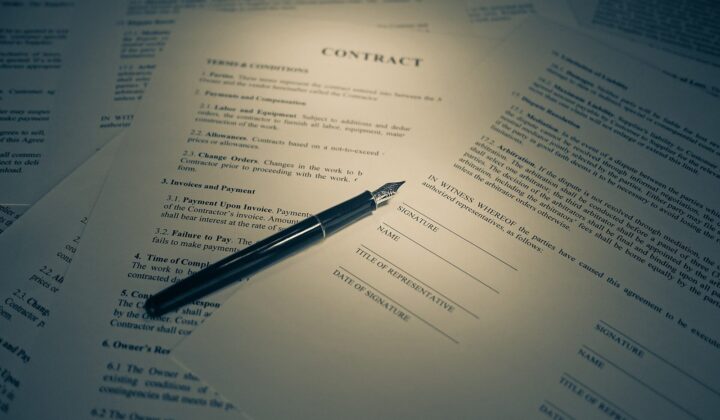
People use “breach of contract” to mean almost any broken promise. Legally it means something narrower: a party failed to perform an obligation the contract actually imposed, without a legal excuse, and the other party suffered a loss as a result. Each of those elements has to be there. Remove one and the claim fails, no matter how badly you were treated.
This guide explains what counts as breach, what does not, what you can recover, and what to do when a contract goes wrong.
The four elements
A viable breach of contract claim generally requires:
- A valid contract. Offer, acceptance, consideration, and parties with capacity. Some contracts must be in writing to be enforceable, depending on the subject matter and state law.
- Performance or a valid excuse. You did what you promised, or you were legally excused from doing it.
- Breach. The other party failed to perform a material obligation.
- Damages. You suffered a loss caused by that failure.
The third element is where most disputes live. Not every failure is a breach that supports a claim, and not every breach is material.
Material versus minor breach
A material breach goes to the heart of the agreement. The other party did not deliver the thing you contracted for, or delivered something fundamentally different. A material breach generally excuses your own performance and supports a claim for damages.
A minor breach is a deviation that does not defeat the purpose of the contract — a late delivery that still had value, a small defect that can be fixed. A minor breach may entitle you to compensation for the difference, but it usually does not let you walk away from the deal entirely.
The distinction matters because the most common overreach in contract disputes is treating a minor breach as a reason to stop performing. If you withhold payment or refuse delivery over a minor issue, you may become the party in breach.
What counts as breach
- Non-performance. The work was never done, the goods never delivered, the payment never made.
- Defective performance. The work was done badly, late, or not to the specification in the contract.
- Partial performance. Some of the obligation was met, the rest abandoned.
- Anticipatory breach. The other party clearly states, before performance is due, that they will not perform. You may be able to treat the contract as ended immediately rather than waiting.
- Breach of an implied term. Good faith and fair dealing, or the duty to cooperate, where state law recognizes them.
What does not count
Some complaints sound like breach and are not:
- Rudeness. Being unpleasant is not a breach unless the contract requires a standard of conduct.
- Exercising a right the contract gives them. A termination for convenience clause, a price adjustment, a demand for cure.
- A change in circumstances. Unless the contract allocates that risk to them, hardship alone is not breach. Courts rarely rewrite a bad bargain.
- Refusing to do something the contract never required. Read the scope clause carefully before alleging failure.
- An oral promise that contradicts a written term. In many cases the written agreement controls, particularly where it contains an integration clause.
Excuses: when non-performance is not breach
A party that did not perform may have a defense.
- Impossibility or impracticability. Performance became objectively impossible — the subject matter was destroyed, or a law made performance illegal. Financial difficulty generally does not qualify.
- Frustration of purpose. The contract can still be performed, but the reason for it has been destroyed by an unforeseen event.
- Failure of a condition precedent. Your obligation only arose if something else happened first, and it did not.
- The other party’s prior breach. If they breached first and materially, your non-performance may be excused.
- Waiver or modification. You accepted late performance before without objection, or agreed to a change.
- Statute of limitations. The deadline to sue has passed.
These defenses are fact-specific. A party claiming impossibility because costs doubled will usually lose; a party claiming impossibility because the specific unique item was destroyed may win.
Remedies: what you can actually recover
Contract law aims to put the injured party in the position they would have been in had the contract been performed. That is the measure, and it constrains what you can ask for.
Expectation damages
The value of the benefit you expected. If a contractor was to build an addition for $80,000 and abandoned the job at 40 percent completion, your damages are generally the cost to finish, less what you still owed.
Reliance damages
What you spent in reliance on the contract, where expectation damages are too speculative. Deposits paid, materials purchased, other opportunities forgone.
Restitution
Return of a benefit conferred. Useful where the contract is unenforceable but you paid for something you did not receive.
Consequential damages
Losses that flow foreseeably from the breach — lost profits from a delayed delivery, for example. These are often limited by the contract and are harder to prove. Many contracts contain a clause excluding consequential damages entirely.
Specific performance
A court order requiring the party to perform, rather than pay. Available mainly where money cannot substitute — a unique piece of land, a one-of-a-kind item. Rare for ordinary services.
What you usually cannot get
Punitive damages are generally unavailable in contract cases. Emotional distress damages are usually unavailable unless the breach also constitutes an independent tort. Attorney’s fees are recoverable only if the contract or a statute provides for them, which is why fee-shifting clauses matter.
Mitigation: your duty to limit the loss
You cannot recover losses you could reasonably have avoided. If a supplier fails to deliver, you generally must buy replacement goods at a reasonable price rather than letting the project stall for months and claiming the entire delay. What counts as reasonable depends on the circumstances, but doing nothing is rarely reasonable.
Document your mitigation efforts. The steps you took to reduce the loss often strengthen your credibility on the rest of the claim.
Read the dispute clause before you sue. Many contracts require mediation or arbitration first, specify the forum, or limit where suit may be filed. Filing in the wrong forum can get your case dismissed or transferred at your expense.
Practical steps when a contract goes wrong
- Re-read the contract. Scope, payment terms, notice provisions, cure periods, dispute resolution, limitation of liability. Notice requirements are frequently missed and frequently fatal.
- Document the breach. Dates, what was promised, what was delivered, what it cost you. Photographs, invoices, messages.
- Send written notice. Many contracts require a written notice and an opportunity to cure before any claim accrues. Send it as the contract requires.
- Quantify the loss. Build the number from receipts and estimates, not from a general sense of unfairness.
- Consider negotiation or mediation. Cheaper, faster, and often produces a payment plan a judgment cannot.
- Check the deadline. Contract limitations periods vary and can be shortened by the agreement itself.
Drafting to avoid the fight
Most contract disputes are drafting failures. The agreement did not say what “complete” meant, who approved changes, when payment was due, what happened if a deadline slipped, or which state’s law applied. If you are writing the next contract, spend the time on scope, acceptance criteria, change orders, payment milestones, termination, and dispute resolution. Those six clauses prevent more litigation than any other part of the document.
This guide is general information about contract law in the United States. Contract formation rules, limitations periods, damages, and enforceability of specific clauses vary by state. Consult a licensed attorney in your jurisdiction about your agreement.